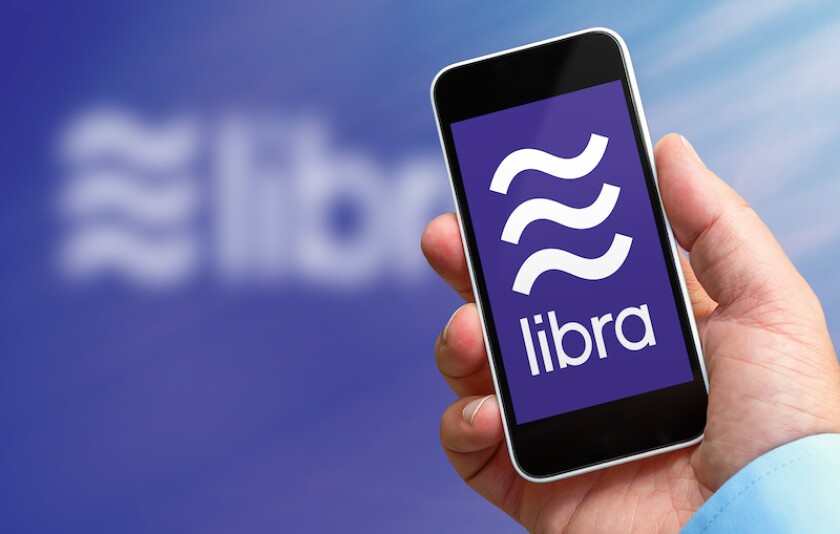
Q: Is Facebook’s Libra coin a positive development for cryptocurrencies in general?
YES
Sam Gibb, partner, Endeavour Ventures
The Libra announcement was met with a cascade of commentary, both positive and negative. Facebook, the largest social network in the world with over 2.4 billion monthly active users, which has benefitted from acting as a centralised repository of everyone's data over the past decade, is now leading the charge to create a new currency in an ecosystem that prides itself on decentralisation and anonymity. While the conflict is apparent, the overall impact on cryptocurrencies and emerging economies could be significantly positive.
There are two key areas where Libra will benefit cryptocurrencies and society generally: 1) legitimising cryptocurrencies by furthering regulatory certainty and awareness; and 2) increasing financial inclusion for people in developing markets that lack access to a basic financial infrastructure.
Having a large and legitimate enterprise front a cryptocurrency adds weight to the cryptocurrency ecosystem. The doubters and haters are starting to pay attention and pile through the treasure troves of information on the complex lattice of disciplines that makes up the cryptocurrency world. Any publicity is good publicity, and considering the implications that a pegged global currency could have on the global economy, it's likely that other people will start to look at different ways the distributed finance movement can be utilised. This could lead to other projects and industries being built on top of or around Libra.
Further, immediately after the announcement, lawmakers in the US started to rally against the proposed digital currency. Representatives exclaimed that they needed to be confident that there are sufficient guardrails in place to deter terrorists, extremists, and/or enemies from utilising the platform. This claim is a bit overblown.
|
|
Haters will hate on the vampire squid of social networks... but the benefits for the cryptocurrency ecosystem are easily discernible |
|
|
The United Nations Office on Drugs and Crime estimates that over $2 trillion in fiat currencies is laundered every year. The current cryptocurrency market represents around a sixth of the total amount of laundering. This also neglects the traceability of cryptocurrencies, but with increased awareness, hopefully lawmakers will be educated about the benefits of cryptocurrencies in due course.
Regardless, having an enterprise with the maturity and financial firepower to parlay with lawmakers will force regulations to be firmed up. Grey areas will be clarified, allowing companies that would benefit from launching cryptocurrency projects to move forward. This could create new industries and opportunities for people in parallel to the Libra complex.
Calibra, the wallet the Libra foundation is building to support Libra (the digital currency), could also enable users to store their stocks, bonds, currencies and commodities in a single secure wallet. The wallet could also function as a decentralised and portable digital identity, a prerequisite to financial inclusion and competition.
The implications are significant. At the moment, almost half of all adults in the world do not have an active bank account. According to the Libra foundation, the cost of financial exclusion means that "70% of small businesses in developing countries lack access to credit, and $25 billion is lost by migrants every year through remittance fees". A massive amount of human potential and productivity is being squandered because of the lack of access to financial services.
The Libra foundation will be able to piggyback off the infrastructure of the cornerstone members, including Facebook. This will give populations in developing countries, where micro-loans of as little as $10 can make a difference, access to credit and remittance services for a fraction of what they currently pay – assuming they can access the services.
Undoubtedly, haters will hate on the vampire squid of social networks when it decides to plant a flag in the cryptocurrency market. However, the benefits for the cryptocurrency ecosystem are easily discernible. Regulations will be written that will allow projects to launch without quirky legal structures or fear of repercussions from regulators. Concerns over the potential for illegal use are uneducated at best.
Further, the benefits from increased financial inclusion in emerging economies could unleash additional human potential and productivity, while reducing the cost of accessing a basic financial infrastructure.
This could be the next step we need to allow democratised access to goods and services over the internet. There are a number of jobs and opportunities that could be created in emerging economies as cryptocurrencies become mainstream.
NO
Takatoshi Shibayama, founder, Blockchain Centre Singapore
Facebook's Libra cryptocurrency has set out to do what Bitcoin was originally created to do – serve as a peer-to-peer (P2P) currency that is free of governmental control without the friction and fees that come with government-created currency. There are many economic rent and barriers that are built on top of the deposit and transaction of money, and getting rid of that will better serve society.
I came to love Bitcoin because it holds central banks accountable for their actions. It is a novel idea that government currency should have checks and balances to ascertain whether they are run properly. Central banks often fail – which is inevitable because we are only human – to maintain a stable monetary system. The economics of human conduct are extremely difficult to monitor, and therefore there will always be errors in balancing the most effective and efficient policies to maintain stability. Furthermore, central banks use monetary policies to stimulate growth, which adds to the problem. This is because the current monetary system is antiquated, dating back to the 17th century. Creating a competitive, decentralised currency to voice the disapproval of how our monetary system is run fits perfectly as a democratic activity.
|
|
It will take a lot more than giving people access to crypto-currencies to solve the unbanked problem |
|
|
This set of ideals has led me to take issue when a group of for-profit corporations joins hands to run an alternative currency. Their motivation is for-profit – especially when it comes to the majority of members of the Libra Association, and especially Calibra. Not only am I worried about privacy violations, I am also concerned that this undermines democracy. Libra is not under the public scrutiny, and there is no way to hold these companies accountable if the general public disapproves of how the Libra token is run. Facebook and any number of its Silicon Valley peers have been able to avoid antitrust cases consistently, so they most likely have little to fear of the government or the users.
The Cambridge Analytica scandal did not stop most people from using Facebook, so the company knows that the general public, on the whole, does not mind giving up personal information and private data. At a time when democracy is at stake in many countries due to the changing configurations of society, the last thing we need is an undemocratically-run currency with significant privacy concerns.
The classic Silicon Valley-style mission and problem statement does not sit well with me either. It will take a lot more than giving people access to cryptocurrencies to solve the unbanked problem. People are not poor because they do not have a bank account. It is a sociological problem that needs a real solution, not registering for a Facebook account or installing WhatsApp. The solution for the unbanked problem is not a scalable business model. Calibra and Facebook do not truly care about the unbanked. It would appear the real thing they are set up to do is exploit our financial and personal data. While it is easy to see right through it, the public still falls into their trap, time and time again.